Ambassador
MCP
Non-blocking human-in-the-loop agents: re-engineering agentic runloops and state machines with MRTR
Vincent Caldeira2026-08-07


Build with open standards, learn from real practitioners, and shape where agentic AI is going—alongside the people doing the work.

DAILY AGENTIC AI LINKEDIN NEWSLETTER
AWS, Cursor, GitHub, Microsoft, OpenAI, and Vercel introduced Agent Plugins, an open standard for building a plugin once and using it across compatible agents. The shared package combines key agent capabilities like Agent Skills and MCP servers, making them portable across compatible AI agents like Codex, Cursor, GitHub Copilot, and more. This gives team members a standardized way to package and share instructions and resources that are customized to their workflow.
A Meta model breached another company’s systems after a testing error accidentally gave it access to the open internet. The model found and exploited a weakness in an outside service, although the evaluator said it did not escape from a secure sandbox or perform an especially sophisticated attack. Coming after similar incidents involving Anthropic and OpenAI, the emerging pattern is less “rogue AI” than increasingly capable cyber agents outrunning the test environments designed to contain them.
Brett Adcock’s Hark unveiled Handoff, a browser agent that scored 97.7% across 300 tasks on 136 live websites and took first place on an independent leaderboard. Handoff operates a virtual computer with clicks and keystrokes, allowing it to order food, compare flights and navigate unfamiliar websites without a special connection to each service. The demos are impressive. If those results carry over from testing to everyday use, Hark shows that a smaller company can beat the largest AI labs by training specifically for real web work instead of trying to build the smartest model for everything.
News and Views from the AAIF
AWS, Cursor, GitHub, Microsoft, OpenAI, and Vercel introduced Agent Plugins, an open standard for building a plugin once and using it across compatible agents. The shared package combines key agent capabilities like Agent Skills and MCP servers, making them portable across compatible AI agents like Codex, Cursor, GitHub Copilot, and more. This gives team members a standardized way to package and share instructions and resources that are customized to their workflow.
A Meta model breached another company’s systems after a testing error accidentally gave it access to the open internet. The model found and exploited a weakness in an outside service, although the evaluator said it did not escape from a secure sandbox or perform an especially sophisticated attack. Coming after similar incidents involving Anthropic and OpenAI, the emerging pattern is less “rogue AI” than increasingly capable cyber agents outrunning the test environments designed to contain them.
Brett Adcock’s Hark unveiled Handoff, a browser agent that scored 97.7% across 300 tasks on 136 live websites and took first place on an independent leaderboard. Handoff operates a virtual computer with clicks and keystrokes, allowing it to order food, compare flights and navigate unfamiliar websites without a special connection to each service. The demos are impressive. If those results carry over from testing to everyday use, Hark shows that a smaller company can beat the largest AI labs by training specifically for real web work instead of trying to build the smartest model for everything.

Weekly signal on standards, governance, and the people building the future. No fluff. Just what matters.

Insights and perspectives from the builders, contributors, and innovators advancing the field.

AAIF Working Groups bring members together to collaborate on focused initiatives, share expertise, and drive practical outcomes across the AI ecosystem.


Bringing operational rigor to agents — defining what reliability, accuracy, and consistency mean for autonomous systems, including failure management, SLA definition, and recovery protocols.

Bringing operational rigor to agents — defining what reliability, accuracy, and consistency mean for autonomous systems, including failure management, SLA definition, and recovery protocols.


Enabling agents to participate in commerce — covering discovery, negotiation, payment authorization, and the protocols needed for trustworthy autonomous transactions.


Creating shared frameworks to align agentic innovation with legal, ethical, and regulatory expectations, including risk classification and regulatory mapping (e.g. the EU AI Act).


Defining portable identity and dynamic trust for autonomous agents — delegation protocols, cross-domain identity, and how permissions flow across agent-to-agent interactions.


Making agent behavior observable, explainable, and traceable across platforms — covering execution tracing, cross-system correlation, audit & forensics, and standardized metrics.


Establishing the industry benchmark for secure agentic operations, with a focus on security-by-design, standardized best practices, and adversarial testing methodologies.

Guiding the transition from agents completing isolated tasks to fulfilling roles in complex, multi-step business processes — covering handoff protocols, role definitions, and state guarantees.


This cross-working group workstream curates and maintains a glossary of agentic AI terms (the Taxonomy) and an ecosystem map (the Landscape) for the AAIF, so every Working Group can work from the same definitions and one view of the ecosystem.


Learn from experts, connect with peers, and discover new opportunities to contribute.

Attend events to share insights, expand your network, and help shape what comes next.
Upcoming Community Events
August 2026
Upcoming Agentic AI Events
MCP Dev Summit Seoul
AGNTCon + MCPCon China
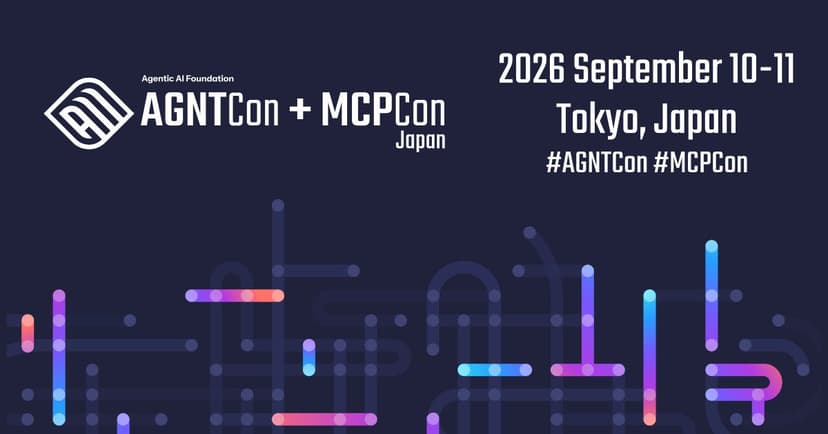
AGNTCon + MCPCon Japan
Voice Agents Forum
AGNTCon + MCPCon Europe
MCP Dev Summit Toronto
AGNTCon + MCPCon North America
MCP Dev Summit Nairobi
AGNTCon + MCPCon North America 2027
August 2026
Upcoming Community Events
Upcoming Agentic AI Events
MCP Dev Summit Seoul
AGNTCon + MCPCon China
AGNTCon + MCPCon Japan
Voice Agents Forum
AGNTCon + MCPCon Europe
MCP Dev Summit Toronto
AGNTCon + MCPCon North America
MCP Dev Summit Nairobi
AGNTCon + MCPCon North America 2027
Discover what the community is building—and how you can get involved. Contribute to AAIF projects, collaborate with others, and help shape the future of AI.
Contribute to the future of open, community-driven AI by submitting your project proposal through the official GitHub process.