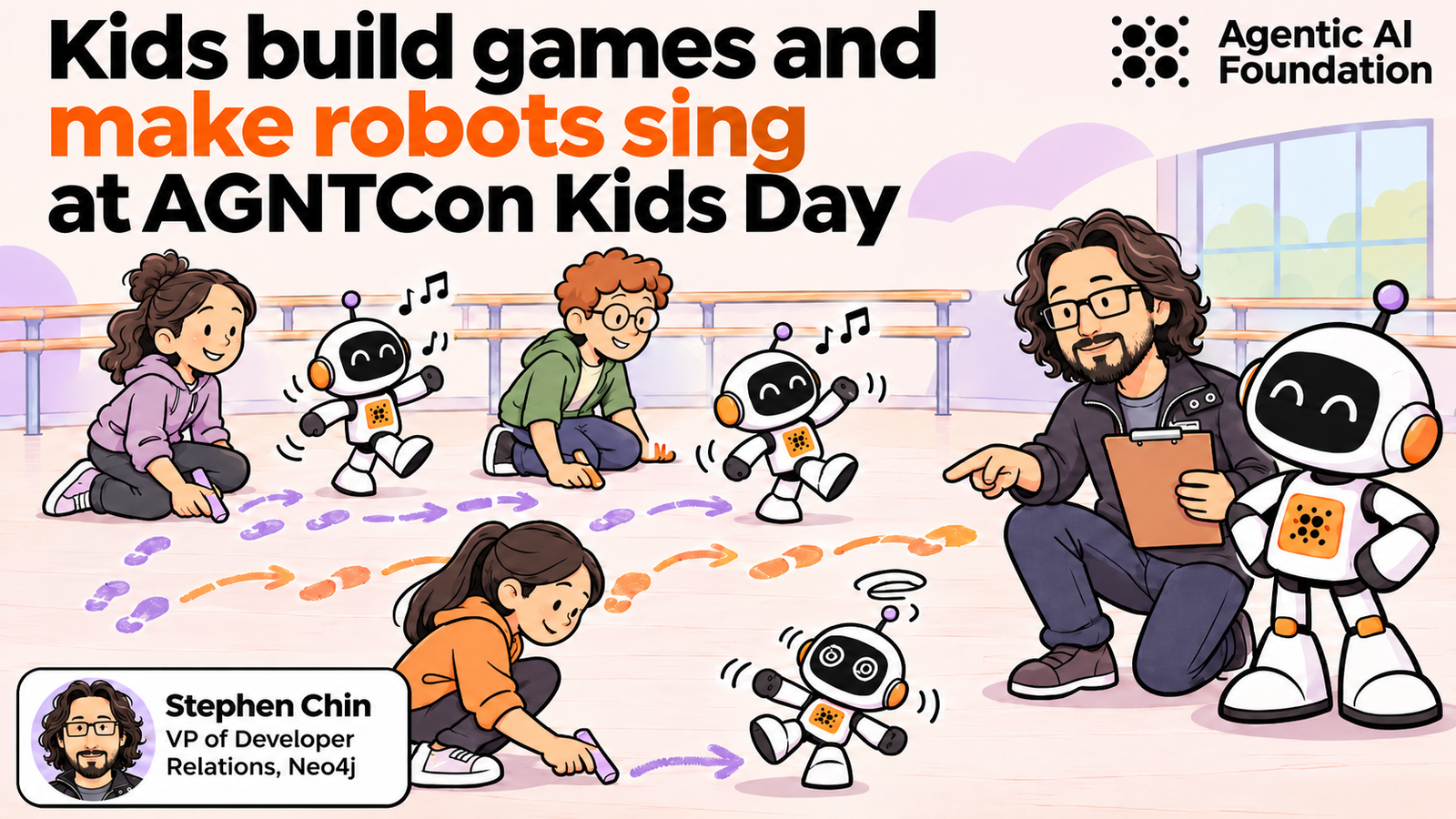

In one afternoon at AGNTCon + MCPCon Kids Day, children made VEX AIM robots sing, move obstacles, and dance. They also created games ranging from a Minecraft simulator to team dodgeball. With goose helping translate their ideas into code, the young builders could spend more of their time deciding what to make and seeing how it worked.
We held the free event on October 24, 2026, at the San Jose Convention Center, following AGNTCon + MCPCon North America. Designed for ages 9 to 18, Kids Day gave participants the opportunity to try both workshops: robotics with Cassandra Chin and game development with Nyah Macklin. Both sessions introduced children to building with open source AI tools.
Linux Foundation, Agentic AI Foundation, and 33 Creative Partners.
Cassandra's workshop, Learn AI by Making Robots Dance, paired goose with VEX AIM robots. Children used ordinary language to describe what they wanted their robots to do, then watched the results. Their projects included singing robots and dance routines, as well as robots that moved obstacles.
Physical robots make feedback immediate. A request to move becomes something you can watch on the floor. When the result differs from the plan, the next step is to describe what happened and ask for a change. The workshop materials encourage children to compare results and think about what to try next.
That approach gives children a useful introduction to debugging. They can compare an instruction with an observable result, explain the difference, and try again. A robot's movement also makes the need for clear directions easy to understand, even for someone writing their first program with AI.
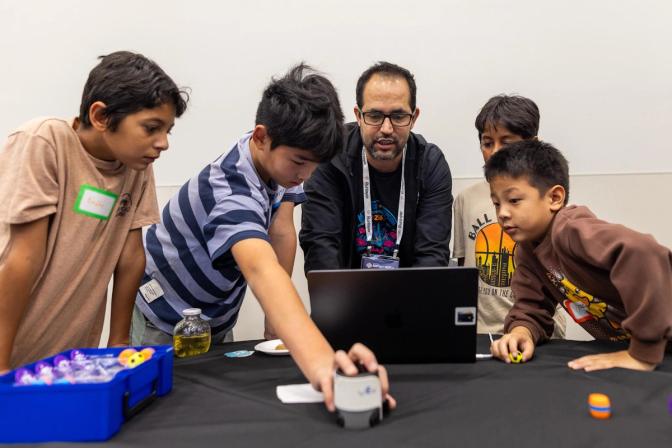
Children test a VEX AIM robot with help from a mentor. Photo: Johnny J. Jones
In Learn Game Development with goose and Godot, Nyah helped children turn their game ideas into playable projects. Godot provided the open source game engine, while goose helped write and change the code. The workshop used Phippy and Friends artwork as a starting point and encouraged children to choose their own goals and rules.
The variety of games reflected those choices. Children built a Minecraft simulator, a turn-based strategy game, dodgeball with teams, and platforming games. They could work on a familiar style of game while deciding what would make their version fun. The workshop gave them a way to explain those decisions to an AI assistant and then play the result.
Testing was part of the activity. The materials encourage children to playtest their games, while the AI assistant's checklist covers controls, reaching an ending and restarting. Children are also encouraged to explain bugs and request changes. Those habits help young developers judge the code an agent produces.
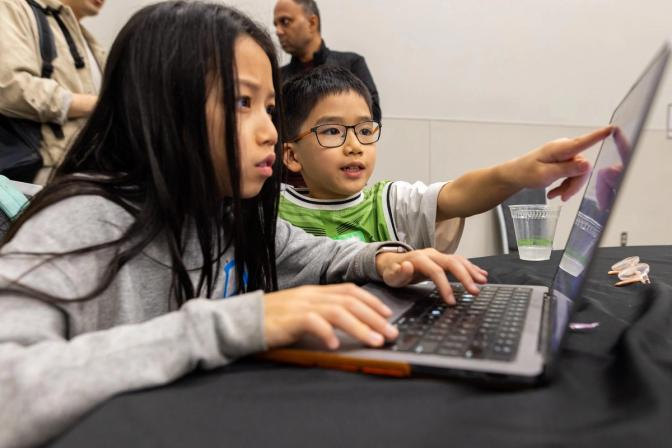
Children compare ideas and test their projects together. Photo: Johnny J. Jones
One participant's presentation captured the excitement of sharing a finished project. Twelve-year-old Ipsit, already an experienced young builder, demonstrated a game he had made with goose and Godot. His father, Shashi Jagtap, shared the moment on LinkedIn, reporting that Ipsit built the game in about 15 minutes. Shashi also described the encouragement his son received from the audience and the connections he made with mentors and other children.
Volunteer Jingyun Fan shared another observation after talking with Ipsit: "you shouldn't use AI to skip thinking." That idea fits the way we approach these workshops. Children choose what they want to build and use their own observations to decide whether the AI's work meets that goal. Getting a program to run gives them something concrete to question and improve.
Thank you to Cassandra Chin and Nyah Macklin for leading the workshops, Docker and Neo4j for supporting Kids Day, and the Linux Foundation and Agentic AI Foundation for making the event possible. We also appreciate the volunteers who helped children get started and keep building, and the families who joined us.
Families and educators can continue with the VEX AIM robot workshop and Phippy Gaming Workshop resources. Start with a small idea, give the AI clear instructions, and test what it makes. Let the young builder decide what happens next.
Share
Author