

| TLDR |
|---|
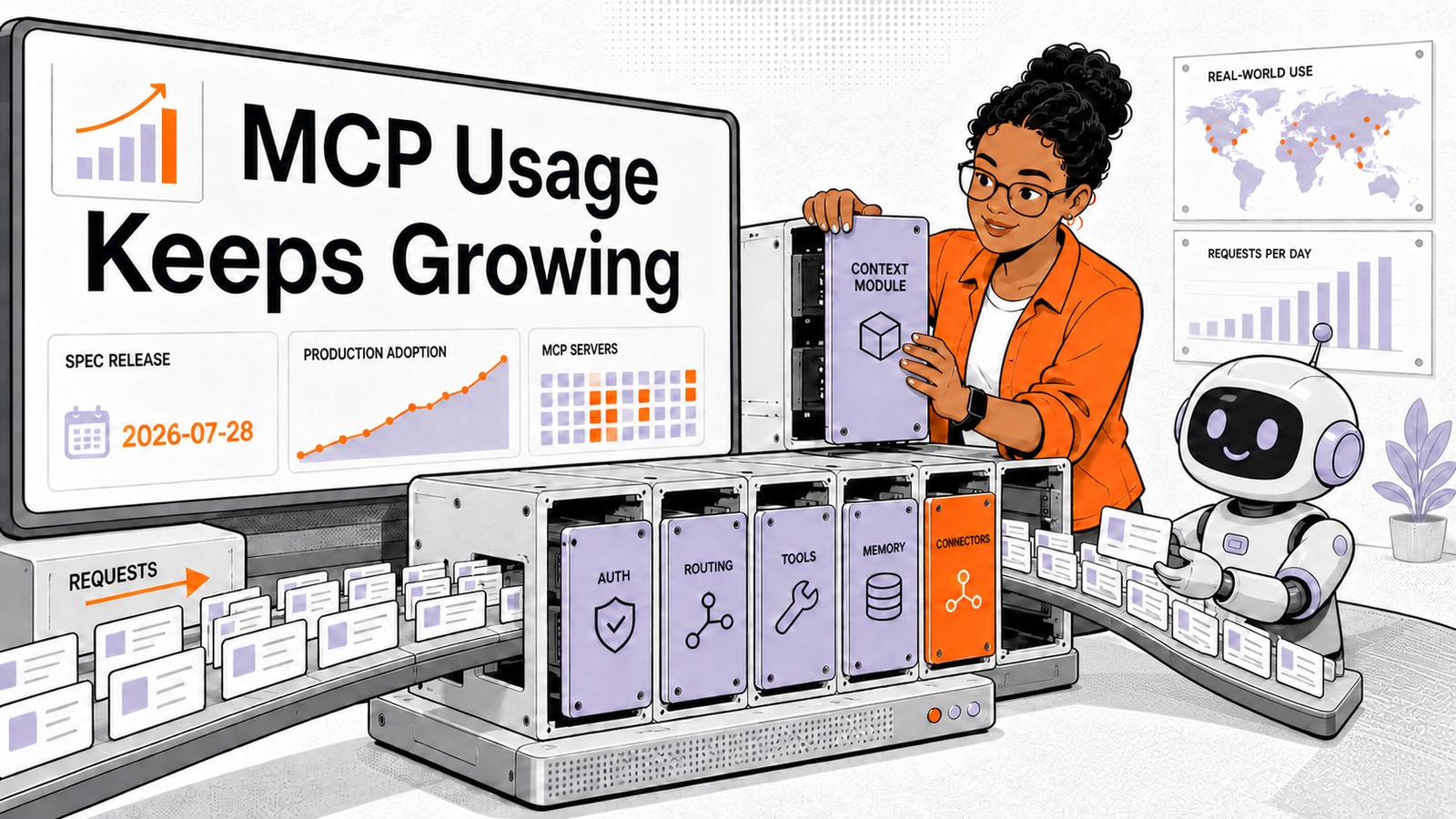
| MCP usage is exploding. Tool calls through OpenAI reached 98 times their January level by August, and Resend passed one million calls in a single month. The latest MCP specification gives servers a simpler way to handle the surge. Each request includes the details needed to process it, so a load balancer can send the request to any available server. |
Enterprise adoption of MCP is rising as companies connect agents to more of their applications. More connections produce more tool calls, so the young protocol had to scale as quickly as people were adopting it.
MCP maintainers responded with a major July release designed for higher volume. Its stateless design allowed service providers to spread requests across available servers, which made it easier to add capacity as demand grew.
August showed why the timing was so important. MCP tool calls from ChatGPT users more than doubled in one month, reaching 98x their January level. The July release gave service providers a better way to absorb the surge that was already underway.
Stateless MCP makes capacity easier to add
Before the July release, some MCP servers had to keep track of earlier requests. As traffic grew, teams had to send later requests back to the same server or make the same information available to every server. Both options added cost and made capacity harder to change.
Under the new stateless design, every request contains the information needed to process it, so teams no longer have to send later requests back to a specific server. Because any available server can take the next request, teams can adjust capacity through their existing cloud systems according to demand.
MCP usage is growing across the ecosystem
The July release arrived as OpenAI was expanding how ChatGPT users find and use connected tools. The company is bringing full MCP support to ChatGPT with tools that take actions.
More connections give ChatGPT users more ways to work across their services, and one request often produces several MCP calls. For example, asking ChatGPT to help you prepare for a meeting may require calls to check your calendar, find recent Slack messages and related emails, and read documents from Google Drive.
More connections and more calls per request help explain why OpenAI's MCP traffic rose so quickly. Tool calls from ChatGPT users reached 98 times their January level by August, with calls more than doubling during August alone.
The jump from July to August was not limited to ChatGPT. Resend's monthly MCP calls also doubled over the same period and reached over a million tool calls soon after MCP went stateless.
Railway reported similarly sharp growth. Their daily MCP users grew more than 500% from July to August. Deployments and logs were among the most common calls, which suggests people were using MCP for regular operational work.
What teams are learning from MCP in production
The usage figures make the growth clear, but they can't show where calls fail or how teams are keeping MCP reliable at this scale. At AGNTCon + MCPCon North America in San Jose on October 22-23, people will compare what’s working in production and what still needs to change.
Speakers will explain how they’re moving existing systems to stateless MCP and keeping tool access secure. Other sessions cover ways to observe and govern MCP as adoption grows.
If your team already runs MCP, bring the lessons the charts can't capture. Share what broke and what held up. Your experience will help the community decide what to solve next. If you're still deciding how MCP fits your business, come see how other teams are using it. You can learn from their choices before making your own.
Register for AGNTCon + MCPCon North America and use code COMMUNITY25 to save 25% on registration.
Share
