

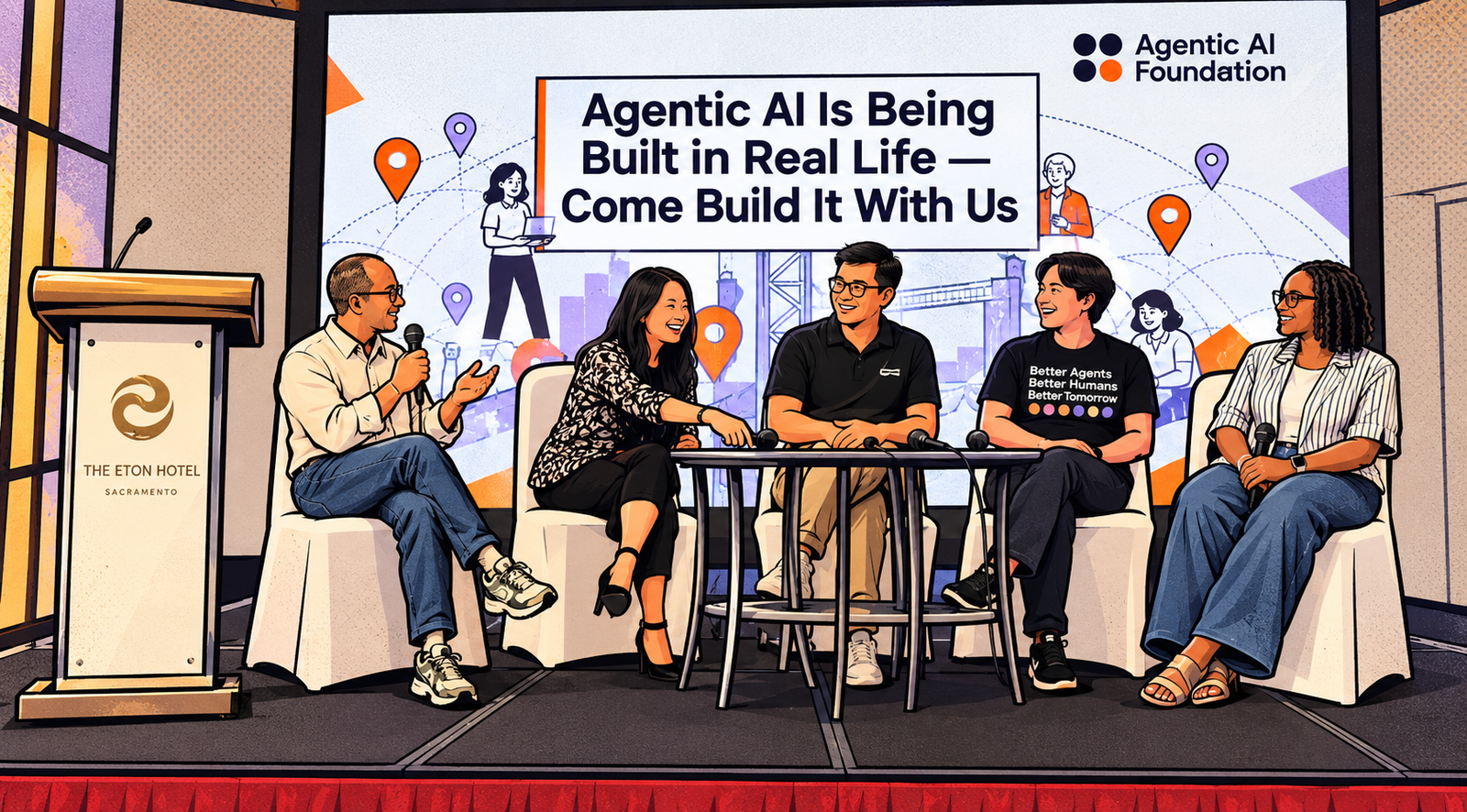
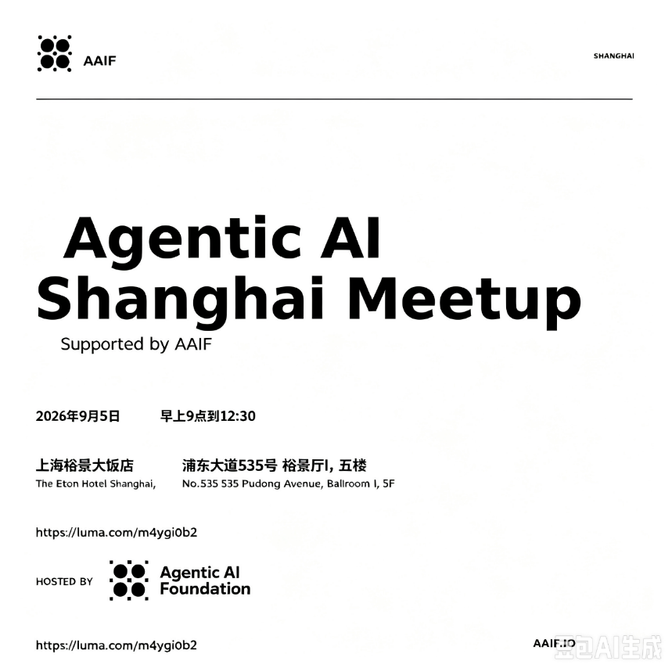
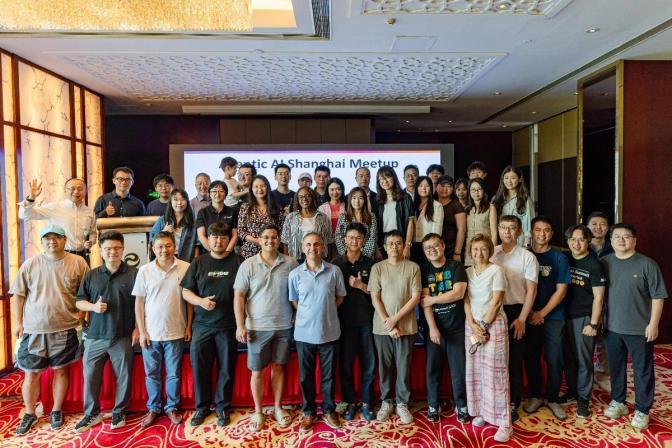
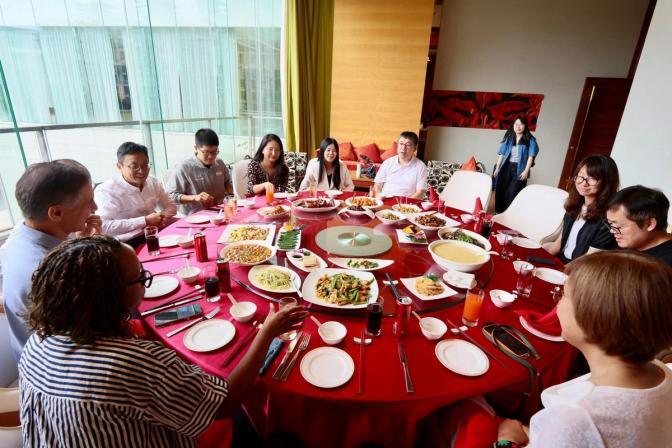
On September 5, members of the AAIF community gathered in Shanghai ahead of AGNTCon + MCPCon China to share work across open source agents, safety, messaging, edge computing, and agent infrastructure.
Mazin Gilbert, Executive Director of AAIF, opened the meetup with an update on the foundation and the wider agent ecosystem. He also highlighted the level of open source AI development taking place across China and the opportunities for the local community to contribute to AAIF projects and technical discussions.
Across the talks and panel that followed, a recurring theme was that different parts of the agent ecosystem are developing in parallel. That leaves practical work to do around interoperability, safety, infrastructure, and open source implementations.
Building across agent ecosystems
Wei Zheng from Huawei introduced openJiuwen and its approach to agent collaboration, including its A2X Registry and A4P work.
The session explored how agents operating across different domains can discover and work with one another, and what infrastructure is needed to support that collaboration.
The wider discussion also considered the role of independent open source agent projects. As models and agent systems develop together, open implementations can give builders more flexibility to work across different models, tools, and infrastructure.
Rather than assuming the ecosystem will settle around a single architecture or implementation, participants discussed the value of practical contributions that make it easier for different systems to work together.
Checking safety before an agent acts
Xue Yu from China Mobile focused on safety for agents interacting with mobile interfaces.
She presented SeerGuard, a safety framework for mobile GUI agents designed to assess risks before actions are executed. The work includes screening instructions and assessing proposed actions against the current GUI state before allowing them to proceed.
For agents that can interact directly with interfaces and tools, those checks raise a practical engineering question: how should a system decide when an action can proceed and when additional safeguards are needed?
Messaging for agent systems
Shijie Zhang from Alibaba Cloud shared lessons from Apache RocketMQ and work on messaging primitives for agent systems.
The session explored how experience from large-scale distributed messaging could apply to communication between agents, including implementation work related to MCP and A2A.
It also prompted discussion about how experience from deployed systems can inform the wider ecosystem. Implementations provide a way to test assumptions in practice and identify where interoperability work or further development may be useful.
Models, harnesses and tools
Richard Bian from Ant Group discussed agent systems through the relationship between models, harnesses, and tools.
His framing was that useful agent behavior depends on these components developing together. Improvements to a model still depend on the surrounding harness and available tools supporting the task the agent needs to perform.
He also shared work around the Ling 3.0 series, including domain-focused models for finance and healthcare, and discussed their use as foundations for further post-training and application development.
Where open source contributors can help
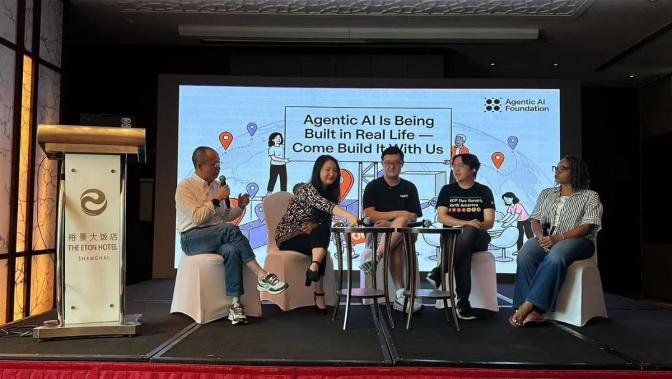
The meetup closed with a panel moderated by Hui Deng, joined by Angie Jones, Richard Bian, Lingli Deng, and Richard Lin.
The discussion looked at where open source agent implementations can add value alongside systems being developed by model providers, and where community contributions could help different parts of the ecosystem work together.
Edge computing was one area identified for further work. Participants discussed the potential for agents running closer to devices and networks, while noting that more open source edge implementations would help the community explore those use cases in practice.
The conversation also reflected interest in closer participation from contributors in China, including through open source implementations, deployment experience, and technical feedback from teams building agent systems.
The talks in Shanghai covered different parts of the stack, but they shared a practical focus: building implementations, testing them in real systems, and feeding those lessons back into open source work. For contributors looking for places to get involved, interoperability, safety, messaging, and edge agents all left open technical questions to work on.
Share
Author