Join us at MCP v2 Release Event • July 28 • S.F. • REGISTER NOW


Build with open standards, learn from real practitioners, and shape where agentic AI is going—alongside the people doing the work.

DAILY AGENTIC AI LINKEDIN NEWSLETTER
Opus 5 brings near-Fable performance to practical production workloads without raising Opus pricing. It lands within 0.5% of Fable 5 on CursorBench at half the cost per task, while Harvey reports comparable legal quality using 26% fewer tokens than Opus 4.8. Deeper reasoning is becoming economical for routine coding, research, and document-heavy agent work.
For his first-ever X post, NVIDIA CEO Jensen Huang chose to defend open-weight models as governments consider restrictions on them. He shared an industry letter from some of the biggest names in tech (and the Linux Foundation) arguing that open weight, permissively licensed models strengthen competition, cybersecurity, and technological sovereignty by letting organizations inspect, customize, validate, secure and run AI themselves. TBC, Huang could have debuted with anything.. Choosing open weights signals that control of the AI stack is a primary concern for the GPU king.
Trajectory gives Claude Code, Codex, Letta Code, and other harnesses a shared way to represent past sessions. The Apache-2.0 format preserves messages, reasoning, and tool activity while reducing sampled histories by roughly 5x. A memory agent can now learn from work completed across multiple coding harnesses without separately interpreting each one’s native transcript format.
News and Views from the AAIF
Opus 5 brings near-Fable performance to practical production workloads without raising Opus pricing. It lands within 0.5% of Fable 5 on CursorBench at half the cost per task, while Harvey reports comparable legal quality using 26% fewer tokens than Opus 4.8. Deeper reasoning is becoming economical for routine coding, research, and document-heavy agent work.
For his first-ever X post, NVIDIA CEO Jensen Huang chose to defend open-weight models as governments consider restrictions on them. He shared an industry letter from some of the biggest names in tech (and the Linux Foundation) arguing that open weight, permissively licensed models strengthen competition, cybersecurity, and technological sovereignty by letting organizations inspect, customize, validate, secure and run AI themselves. TBC, Huang could have debuted with anything.. Choosing open weights signals that control of the AI stack is a primary concern for the GPU king.
Trajectory gives Claude Code, Codex, Letta Code, and other harnesses a shared way to represent past sessions. The Apache-2.0 format preserves messages, reasoning, and tool activity while reducing sampled histories by roughly 5x. A memory agent can now learn from work completed across multiple coding harnesses without separately interpreting each one’s native transcript format.

Weekly signal on standards, governance, and the people building the future. No fluff. Just what matters.

Insights and perspectives from the builders, contributors, and innovators advancing the field.

AAIF Working Groups bring members together to collaborate on focused initiatives, share expertise, and drive practical outcomes across the AI ecosystem.


Bringing operational rigor to agents — defining what reliability, accuracy, and consistency mean for autonomous systems, including failure management, SLA definition, and recovery protocols.

Bringing operational rigor to agents — defining what reliability, accuracy, and consistency mean for autonomous systems, including failure management, SLA definition, and recovery protocols.

Enabling agents to participate in commerce — covering discovery, negotiation, payment authorization, and the protocols needed for trustworthy autonomous transactions.


Creating shared frameworks to align agentic innovation with legal, ethical, and regulatory expectations, including risk classification and regulatory mapping (e.g. the EU AI Act).


Defining portable identity and dynamic trust for autonomous agents — delegation protocols, cross-domain identity, and how permissions flow across agent-to-agent interactions.


Making agent behavior observable, explainable, and traceable across platforms — covering execution tracing, cross-system correlation, audit & forensics, and standardized metrics.


Establishing the industry benchmark for secure agentic operations, with a focus on security-by-design, standardized best practices, and adversarial testing methodologies.

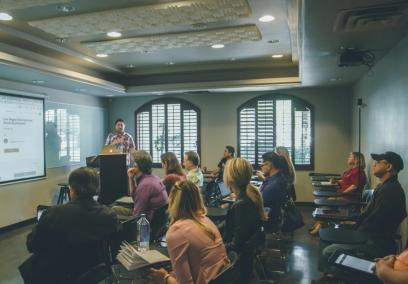
Guiding the transition from agents completing isolated tasks to fulfilling roles in complex, multi-step business processes — covering handoff protocols, role definitions, and state guarantees.


Learn from experts, connect with peers, and discover new opportunities to contribute.

Attend events to share insights, expand your network, and help shape what comes next.
Upcoming Community Events
August 2026
Upcoming Agentic AI Events
MCP Dev Summit Seoul
AGNTCon + MCPCon China
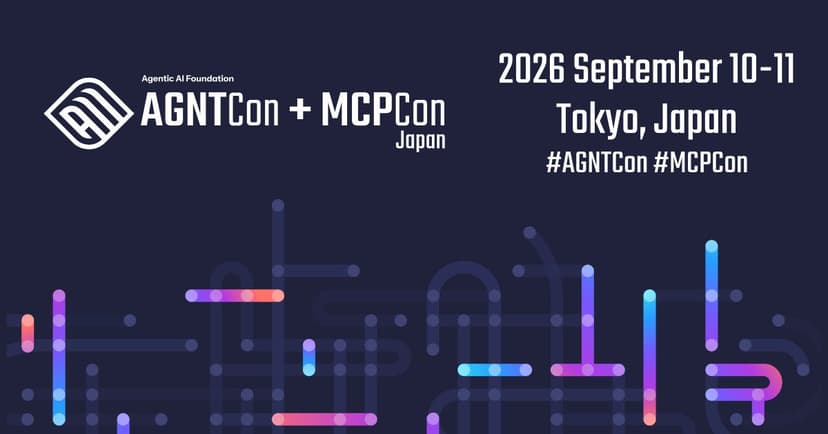
AGNTCon + MCPCon Japan
Voice Agents Forum
AGNTCon + MCPCon Europe
MCP Dev Summit Toronto
AGNTCon + MCPCon North America
MCP Dev Summit Nairobi
August 2026
Upcoming Community Events
Upcoming Agentic AI Events
MCP Dev Summit Seoul
AGNTCon + MCPCon China
AGNTCon + MCPCon Japan
Voice Agents Forum
AGNTCon + MCPCon Europe
MCP Dev Summit Toronto
AGNTCon + MCPCon North America
MCP Dev Summit Nairobi
Discover what the community is building—and how you can get involved. Contribute to AAIF projects, collaborate with others, and help shape the future of AI.
Contribute to the future of open, community-driven AI by submitting your project proposal through the official GitHub process.